Tuesday, November 9, 2010

Boosting Your Bottom Line with Effective POS Displays


In competitive retail environments, great “Point of Sale” displays can be the critical element that converts curious shopper into a serious customer. With that in mind, lets go through some tips for great POS displays.


As customers flow through your store browsing the products on display, they are searching for one of two things: More information on the products on display, or a great bargain. “Point of Sale” displays are the ideal tool for both of these goals. By providing prices and a sales pitch to the consumer, they convert window shoppers into paying customers at a higher rate than any other type of retail display or signage.


It all sound simple right? Well the principal is, but when it comes to choosing your POS display of choice, things start to get a little more complicated with the huge range of displays available. Will you opt for table talkers, suspended signage, floor graphics, free standing signs, a modular system, clip frames, pull up banners, shelf decals or a light box?


That’s where the professionals come in. Despite being a considerable capital investment, often the best choice is to hire a retail display consultant. Alternatively you might want to call upon your own experience in devising a display strategy for your shop. In this case there are many online suppliers of POS Displays and products to choose from.


Whatever course of action suits your business, the one thing you can be sure of is that some action is better than none. Point of Sale display is a “trial and error” pursuit, so even if your initial efforts are not successful, you should see this not as a failure, but one step on the road to success!

So good luck… and happy Point of Sales!

Tuesday, October 19, 2010

Free Symbols and Arrows Download

The chances are if you're involved with the design side of retail display (that is the graphic design side) at some time or another you will have come across the need for some stock symbols or pictograms, or maybe a particular style of arrow that has be embeded in your mind.

Well, I don't have the time to design these types of sign and graphic elements myself and I suspect that neither do the majority of designers who are involved in developing retail graphics. That's why when I come across a valuable resource that's made my life easier, I feel compelled to share said resource.

So take a look at these:


These symbols are available as a typeface and what's more they're free! Download 'em here: Free Sign Symbols.

So... do you ever feel the need to tell someone where to go?


Then you can download these free arrow symbols from the Signs & Symbols blog, which has a nice collection of various vector symbol and pictograms to download... along with some mildly amusing commentary.

Enjoy and use wisely!

Monday, July 19, 2010

Retractable Queue Barriers

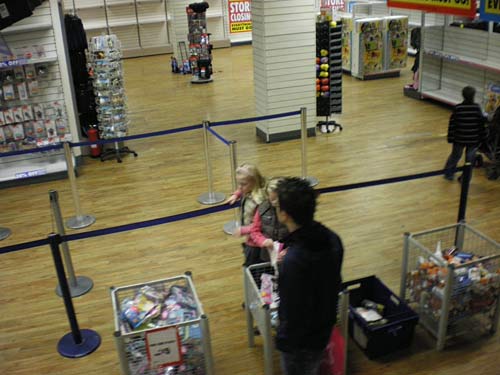
Some of the larger retailers around use retractable barriers as a means of keeping queues at their cash registers in order. It's a problem that all retailers would probably like to have - so many people queueing up to buy that a means of ordering the customer line up is required. But such barriers can also be of use if you have limited space around the register area and that area becoming blocked if shoppers queue in the wrong position. Here barrier posts can be used to ensure your customers wait to be served in the most efficient area.


One bonus of using such queue poles, is that most of these units have the facility to attach a sign holder to the top of the pole. You commonly see the sign holders displaying simple messages such as this:

Would you class that as an effective use of such a sign holder? I wouldn't. Sure it's informative and your customers may need a little bit of direction to have them stand in the correct location, but I would definitely add some branding to sign like this and, even better, incorporate some promotion material into your basic ol' "queue here" message. While customers are standing inline you might as well tell them why your business is so great, or alert them to a special offer that is currently running or try to "up-sell them". Why not?

So treat your queue barrier posts like any of your other display stands and ask yourself.... "How can I make the most of my investment in this product?" What ever your answer is, I guarantee it will be something more that the standard "Queue Here".

Wednesday, June 23, 2010

Suggestion and Donation Boxes

They may not be the first product you think of when you're thinking of adding to your suite of display fixtures, but a suggestion box can be a great way to start a conversation with your customers. People are more likely to give candid and truthful feedback when they can put it down anonymously on a piece of paper, so they are a reliable means of getting customers thoughts on your products, service and staff. Let's face it, if people are encountering a major roadblock in the buy process, you need to know about it!


As an added bonus, when people do leave you a suggestion or comment, you can also use the form that they fill out to collect some customer infomation that you can then use to respond to their ideas or complaints and thus begin a conversation that may become a valueable long term asset. An example of this is that if a customer has made a complaint, you could in turn offer them an exclusive discount, that may make up for their grievances, but more importantly, may get them back into your store when otherwise they might have been lost.
And for when it comes to employing a donation box, this works more as a positive branding excersise, which of course also has the primary function of helping out your charity of choice - it's a win-win!

Tuesday, June 1, 2010

Media Backdrop Banners Are Here

Have you ever found yourself dreaming, that rather than having to spend all that time putting together elaborate shop window displays, you could get your hands on a huge banner stand that you could simply place in your shop window and let the graphics do the talking?

OK, so you probably haven't, but now that I've brought it up, what do you think? If sounds like your cup of tea, you might be keen to know that pull up banners as large as 2.4 x 2 meters are available!

Usually they are refered to as Media Backdrops, as they are commonly used as a backdrop to press conferences as well as sometimes as a backdrop display for television interviews with sports men and women.

Large banner stands like these are are also used at trade shows and exhibitions, where they excel due to the fact that they are so easy to mover around - the large banner retracts into the banner dispays base, the whole unit is packed up in its carry bag for transport.


Anyway there's no need to dream - it's a reality. Media backdrops are here and they're just begging to be used as retail displays... so go for it!

Sunday, May 30, 2010

Ten Steps for Lucrative Point of Sale Displays


For years marketers and major brands have known it, but now these days there is also is a wealth of consumer research proving that Point of Sale display material drives incremental retail sales.

The effectiveness of this advertising combined with falling print and production costs means that this form merchandising is no longer just for the big boys. If you’ve ever considered jumping on this profitable retail band-wagon, but not know where to start, here are some of the key steps in developing a successful Point of Sale advertising campaign…
  1. Your Point of Sale display must carry a ‘call to action’ message
  2. The display message be read and understood at a glance
  3. The most effective results are achieved by linking the display with other in-store advertising or a broader external advertising campaign
  4. Sales representatives or retail staff must be well informed on exactly how to assemble and where to place your POS display
  5. On that note, retail staff must be informed if there is an exclusive offering that goes along with the display
  6. Furthermore, retail staff can be offered an incentive to suggestively sell your deal to customers.
  7. Be sure that the proposed Point of Sale elements is durable enough to last the life of the promotion
  8. It must be considered that all Point of Sale items be cost effectively distributed to their retail destinations
  9. To ensure ongoing value from your Point of Sale advertising campaigns, be sure that results can be effectively monitored and measured
  10. Increasingly, it is desired (and often specified) that Point of Sale displays are able to be easily and efficiently recycled.

By bearing these points in mind while planning and designing you next Point of Sale promotion, you’ll be able to avoid pitfalls and give yourself the best chance for success in this lucrative, yet often overlooked form of advertising. Good luck!

by Jeff Parry

Sunday, April 18, 2010

Window Displays: Dress to Impress in Just 3 Seconds!

Here’s a frightening statistic - On average a shop window display has just 3 seconds to convert passers-by into customers. Go on, count to three… 1, …2, …3. There! You just lost a customer!

With that in mind, let’s not waste any more time. First off we’ll start with the very basics of what your window display will need to have any chance of impressing on your next wave of potential customers:

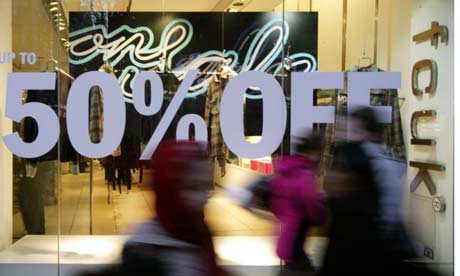
Three seconds to impress. Is your message getting through?

Calling All Shoppers
Window displays need not only to capture the attention of passers-by, but also to motivate shoppers to act on their interest. Think about it… these people are out there shopping - they want to buy things! Your job is to convince them that your product is the answer to all their woes and to give them a good reason to buy it right NOW! First and foremost there must be a clear call to action.


A subtle call to action. Are you getting this message?

You’re Selling What?
This seems a little obvious, but you’d be surprised how often it is over-looked. Shoppers need to understand exactly what it is that you’re selling. I can almost hear you saying it: “I’m not an idiot! Of course they get what I’m selling!” And don’t get me wrong, I’d never say you’re an idiot, just be sure to double check that the actual product hasn’t been lost in the creative masterpiece of your window display.


What about this one? Are you getting the message? Or just getting blinded by the light?

Are We Clear?
You need to send a clear message. And to send a clear message, you need to be clear on what your message is. Are we clear? OK, good. But this point isn’t over yet. The clearest message in the world won’t make you a cent in sales if it’s a message that people aren’t interested in hearing. This, of course, comes down to knowing your market. It’s a topic far too vast to cover here and something that I sincerely hope you already have under control - or we might as well just put down our pens and pencils and go home!

OK, we counted down those three seconds and are agreed on how very brief the “window” of opportunity really is. And now we’ve also got the most basic of window display basics under control. But, unfortunately now I’ve got some more bad news for you.

The reality of your situation may be even more brutal than those 3 seconds suggest. You may have the misfortune to be situated near to an extremely well-resourced department store’s window display, a TV store with vast numbers of synchronised screens, or maybe even a troupe of incredibly acrobatic street performers.

This may make life a little difficult

Whatever it is, this surrounding “clutter” must be conquered.

It’s a simple concept, but when you consider that it might actually be well considered and thoughtfully executed clutter that has been put in place by the marketing teams of your opposition (I’m not talking about the acrobats now), then you’re talking about a marketing war. And it’s a war that you can’t afford to lose.

So how do you go about constructing a mighty window display that conquers all clutter and win the hearts and minds of today’s battle wary consumer? In just 3 seconds?

Sheeeesssh…. I don’t know…. that sounds really hard! And in truth the specifics really depend on a lot of variables such as the nature of your business, the size and location of your window display and the products you offer. But don’t despair, what I can tell you are some things that you absolutely, positively mustn’t do! And the majority of the time, that’s half the battle won. So here we go again:
  • Don’t try to say (or display) too much. Tell too many stories in a limited space results in nothing but clutter – and clutter isn’t a story that anyone wants to hear. You’ve heard it before, but less really is more! A strong, clear statement will always triumph over the 'I am trying to sell you everything' approach.
 Less display, more impact!
  • “Apples with Apples” is another basic principle of effective visual merchandising. Don’t be tempted to split your displays and thus dilute your window’s message. Despite some popular theories on today’s fragmented market places, consumers still appreciate the value of an expert. Set yourself up as this expert by ensuring your window displays convey the clear message that you are 'in the business' of the product that’s on display. Being the expert on that product or service gives shoppers a great reason as to come into your shop – even if they are not intending to buy.
  •   "Apples with apples"
  • Don’t forget to have strong visual cues inside your shop. Remember that call to action I talked about? Clearly repeat this with your in-store displays and signage. Think of it as holding the hand of your visitors and walking them from the entrance of you shop through to the products location within. With out this link, even the most perfectly plotted and executed window display falls down.
     
  • Nothing speaks louder to your customers that you’re a static business bereft of ideas than a static window display doing nothing more than collecting dust week after week. Continual renewal is key, so get inspired and in turn you’ll inspire your customers!
     
  • Shine a little light. Lighting is an often over looked component of window displays (as well as in-store displays). And considering that it can make or break even the best displays, it’s a detail that nobody can afford to neglect. Check that the lighting is strong enough and directed on the promotional piece, product or the statement that is key to your message.
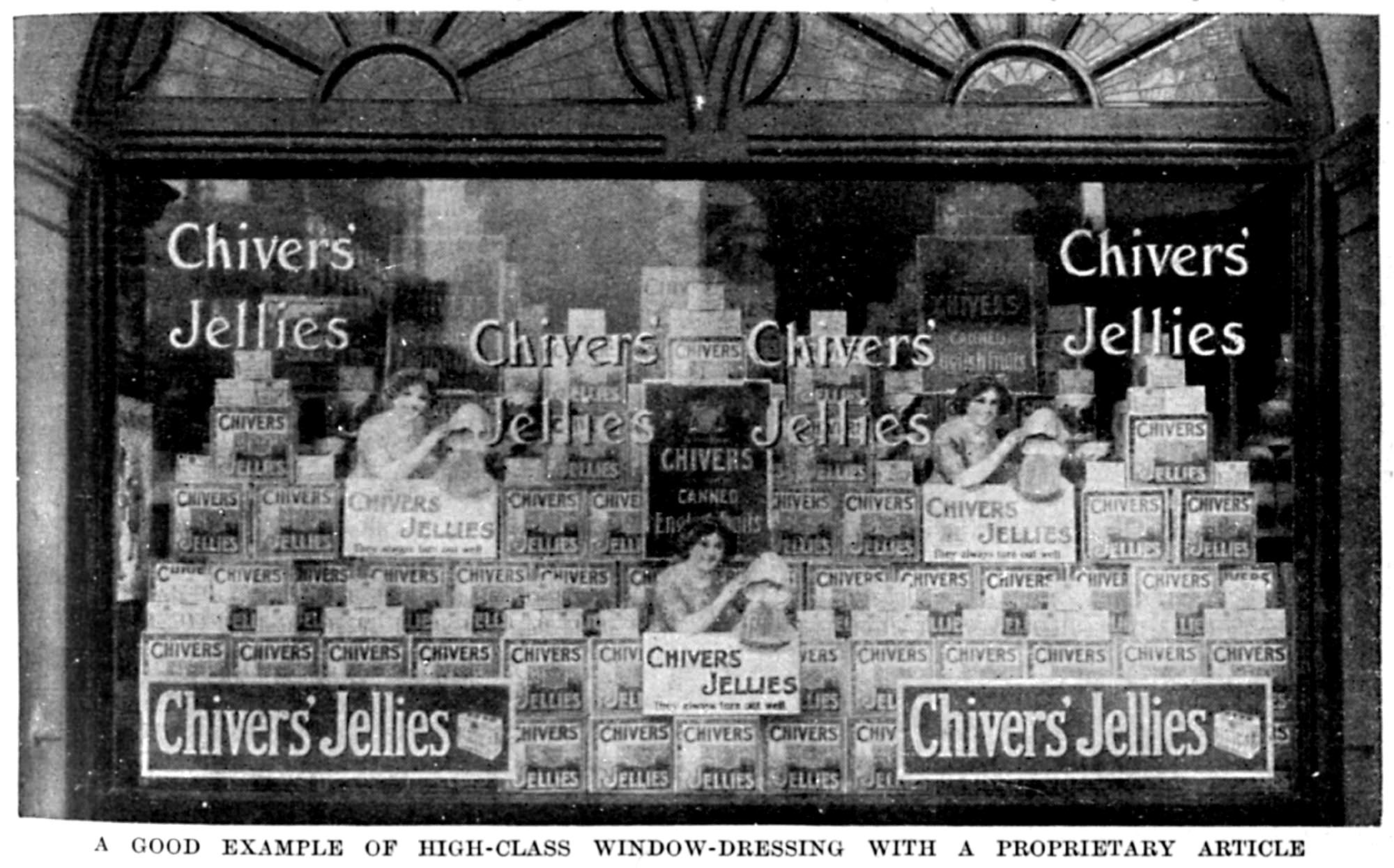
  • Get back to basics. While your busy getting inspired, be sure your not neglecting the basics. The classic shapes of the pyramid, zig zag, fan or step are visual merchandising main-stays because they work! Many an effective window display has been built using these shapes as the base frameworks within the window and there’s no reason that yours shouldn’t be the next.
     
  • The classics are classics for good reason! 
  • Visual merchandising is a specialised skill in itself. In fact it’s a combination of skill, education, artistic creativity, science and invention. You wouldn’t have an inexperienced floor staff member do your accounting for you and you should think of your visual merchandising in the same way. Having a specialist visual merchandiser do your window displays may cost a little more, but can triple its worth in sales.
     
  • Finally, be sure to walk the talk. If your window display is as successful as you hope it to be, it is critical that you deliver on the promise of the window. When a customer is engaged and then let down, due to a stock shortage you undermine not only the current display, but the ability of your business as a whole to deliver on its word.

What do you think? Feeling a little more prepared for battle? I hope so.

Just remember, if you avoid the above mistakes and adhere to basic merchandising principals, you’re already well on your way to ensuring that your window display efforts are victorious. Good luck

Author: Jeff Parry